
Meta Description: Planning a home renovation in Southwest Florida? Avoid these five common renovation mistakes before remodeling your home in Sarasota, Charlotte, or DeSoto County.
Five Mistakes Homeowners Make Before Starting a Renovation
A successful renovation starts long before the first wall comes down.
Renovating your home should be exciting. You get the opportunity to rethink the way your home looks, feels, and functions—and create a space that works better for the way you live today.
But renovations also involve a lot of decisions.
Floor plans. Materials. Fixtures. Budgets. Permits. Contractors. Timelines. Kitchens. Bathrooms. Outdoor spaces. And often a few decisions you did not realize you would need to make until construction is already underway.
That is why the planning stage matters so much.
At Briar Creek Construction, we work with homeowners throughout Sarasota, Charlotte, and DeSoto Counties on home renovations, custom improvements, and complete residential transformations. We have found that many renovation problems can be traced back to decisions made—or not made—before construction begins.
Here are five common mistakes homeowners make before starting a home renovation in Southwest Florida, along with practical ways to avoid them.
1. Focusing Only on the Lowest Price
Getting multiple estimates is smart.
Automatically choosing the lowest one is not always the same thing.
Two renovation proposals can have very different prices because they may include very different levels of work.
One contractor may include higher-quality materials, detailed preparation, experienced trades, site protection, project supervision, cleanup, and finish work. Another estimate may leave some of those items unclear or exclude them completely.
The important question is not simply:
“Which contractor costs less?”
It is:
“What exactly am I getting for this price?”
Before comparing renovation estimates, look closely at:
- Scope of work
- Materials and allowances
- What is included and excluded
- Who will supervise the project
- How subcontractors are selected
- How changes are approved
- Estimated timeline
- Cleanup and site protection
- Warranty and post-project support
- Licensing and insurance
A detailed proposal gives you something meaningful to compare.
A vague proposal with one attractive number at the bottom does not.
The better approach
Ask each renovation contractor to walk you through the estimate.
If one proposal is significantly lower than the others, ask why. There may be a perfectly reasonable explanation, but you should understand the difference before signing a contract.
For a major home renovation, value comes from more than materials and labor. Experience, communication, supervision, craftsmanship, and the ability to solve problems during construction all matter.
A good renovation should still feel like a good decision years after the final invoice is paid.
2. Designing Only for the Way You Live Today
A renovation is a chance to fix what does not work in your home now.
It is also a chance to think about what you may need five, ten, or fifteen years from now.
Homeowners sometimes become so focused on solving an immediate problem that they miss the opportunity to make the entire home work better long term.
Before finalizing the design, think about how your lifestyle could change.
Will you work from home more often?
Will children or grandchildren need more space?
Would a guest suite become useful?
Could your parents eventually stay with you for longer periods?
Would you benefit from better storage?
Could a first-floor bedroom or more accessible bathroom make sense later?
Do you entertain enough that the kitchen and outdoor living areas should work together?
These decisions are easier to address during the planning stage than after construction is complete.
Think beyond individual rooms
One of the biggest advantages of a substantial home renovation is the ability to improve how spaces relate to one another.
Instead of asking only, “What should we change in the kitchen?” consider questions like:
- Should the kitchen connect more directly to the lanai?
- Would removing or relocating a wall improve circulation?
- Is there enough pantry storage?
- Where do guests naturally gather?
- Does the primary suite provide enough privacy?
- Are laundry and mudroom spaces located where they are actually useful?
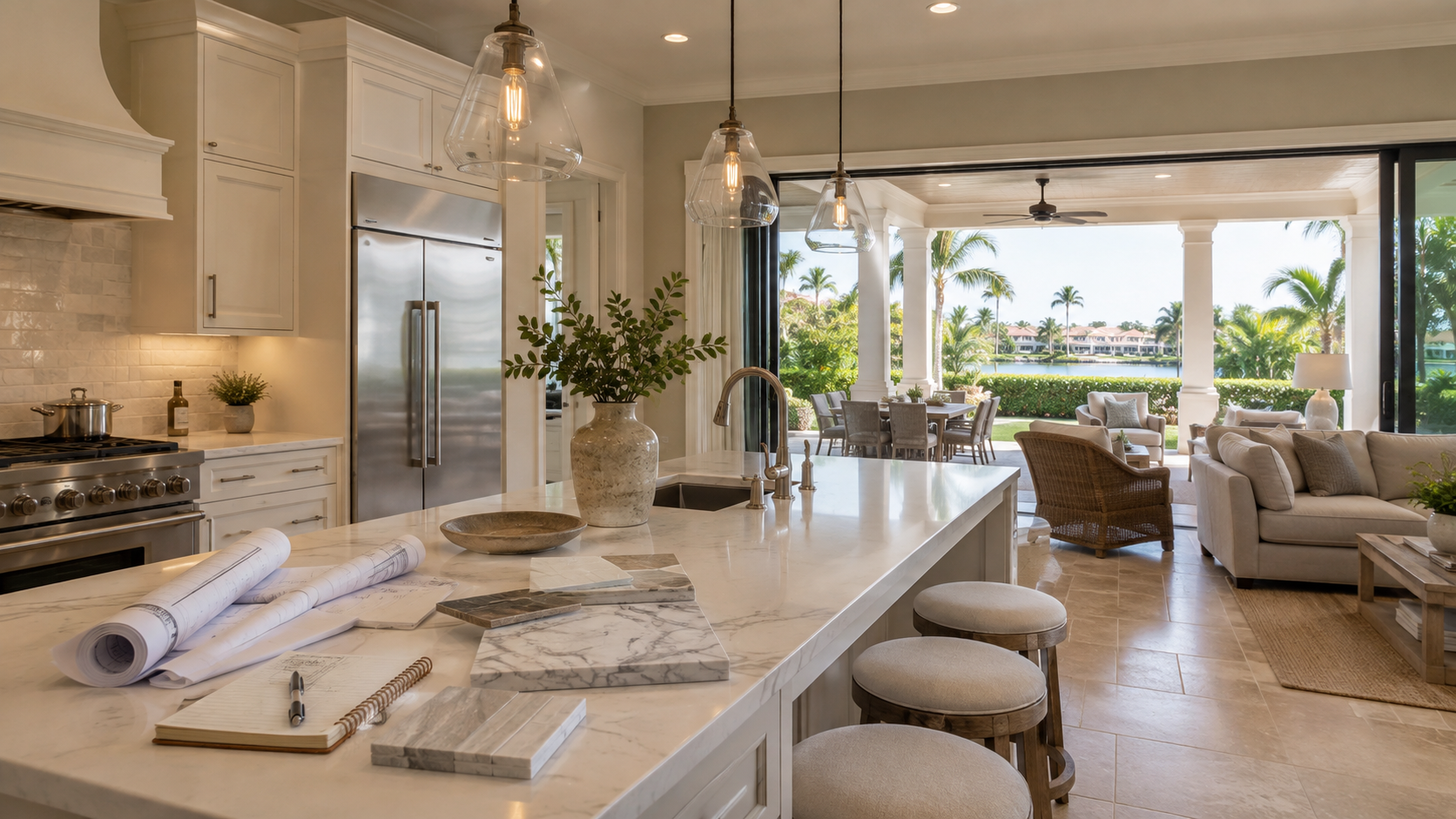
- Can indoor and outdoor entertaining areas function as one space?
The goal is not to predict every change your family will ever experience.
It is to avoid designing yourself into another renovation a few years from now.
3. Making Too Many Decisions After Construction Starts
Some changes during a renovation are unavoidable.
Once walls are opened, existing homes occasionally reveal conditions that could not be seen beforehand. Homeowners may also see something during construction and realize they prefer a different solution.
That happens.
The problem is when major design decisions are routinely being made after work has already started.
Changing cabinet layouts after electrical has been installed can affect multiple trades.
Moving plumbing after framing is complete can affect cost and schedule.
Changing flooring after materials have been ordered may introduce lead times.
Replacing a selected fixture may require different rough-in dimensions.
One decision can create a chain reaction.
Spend more time planning before demolition
Whenever possible, make the major selections before the project begins.
That includes:
- Flooring
- Cabinetry
- Countertops
- Plumbing fixtures
- Appliances
- Lighting
- Tile
- Hardware
- Paint direction
- Doors and trim
- Built-ins
- Outdoor finishes
The more decisions that are resolved before construction, the easier it is for your builder to coordinate trades, order materials, and keep the project moving.
Good planning does not eliminate every change.
It reduces unnecessary ones.
Understand how changes are handled
Before hiring a renovation contractor, ask how changes to the project are documented and approved.
If you decide to add something, upgrade something, or change the original scope, you should understand the cost and schedule impact before the additional work moves forward.
That keeps everyone working from the same expectations.
4. Hiring a Renovation Contractor Without Doing the Homework
A beautiful website or polished estimate should not be the only reason you hire someone to renovate your home.
A substantial renovation requires trusting a contractor with one of your largest investments.
Do some homework.
At minimum, ask about:
- Florida contractor licensing
- Insurance
- Experience with projects similar to yours
- Recent client references
- Who manages the job site
- How often you will receive updates
- Who your main point of contact will be
- How subcontractors are selected
- How unexpected conditions are handled
- What happens after the project is finished
And ask to see real work.
Finished project photographs are helpful, but seeing the quality and organization of an active construction site can tell you a lot too.
Talk to previous clients
References are especially valuable because homeowners who have already completed the process can answer questions a portfolio cannot.
Ask them:
Did the contractor communicate?
Did the crew show up consistently?
Were problems handled professionally?
Were costs explained?
Was the site kept reasonably organized?
Would you hire the contractor again?
That last question tends to tell you quite a bit.
Know who will actually run your renovation
This is another question homeowners often overlook.
The person who sells the project may not be the person managing the construction.
Ask directly:
“Who will be responsible for my project once construction starts?”
At Briar Creek Construction, owner Brandon Lynch remains personally involved in projects rather than disappearing after the contract is signed. That hands-on approach is important because renovation work involves constant coordination between the homeowner, builder, craftsmen, designers, inspectors, and specialty trades.
For a major renovation, access to the person making decisions matters.
Briar Creek Construction is a licensed Florida general contractor, CGC1533335, serving homeowners throughout Sarasota, Charlotte, and DeSoto Counties.
5. Treating Outdoor Living as a Separate Project
This mistake is especially common in Southwest Florida.
A homeowner may spend months planning the kitchen, great room, flooring, bathrooms, and interior finishes—then decide to deal with the backyard later.
Sometimes that makes sense.
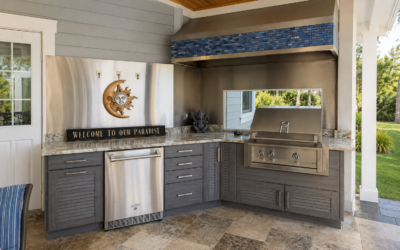
But if you already know that a pool, lanai, outdoor kitchen, covered patio, or backyard renovation is part of the long-term plan, it is worth discussing those spaces before the interior renovation begins.
In Southwest Florida, outdoor living is not just an occasional-use feature.
For many families, it becomes one of the most-used parts of the home.
Think about the entire property together
Even if all the work will not happen at once, planning it together can help create a more cohesive result.
Consider:
- How interior flooring transitions to the lanai
- Where large sliding or folding doors should be located
- Sightlines from the kitchen and living room
- Outdoor kitchen placement
- Pool access
- Covered seating
- Dining areas
- Screen enclosures
- Lighting
- Electrical needs
- Plumbing and gas requirements
- Storage
- Landscaping
- Traffic between indoor and outdoor spaces
If you renovate the kitchen now and build an outdoor kitchen two years later, the two spaces should still feel like they were designed as part of the same home.
The same applies to a pool.
Planning future access, views, utilities, and outdoor entertaining areas during the renovation may prevent you from having to undo finished work later.
Briar Creek Construction handles both home renovations and custom pools and outdoor living projects, allowing these areas to be considered as one overall residential plan.
How Should You Prepare for a Home Renovation?
Before contacting a builder, you do not need architectural drawings or every finish selected.
But a little preparation makes the first conversation more productive.
Start by thinking through four things:
Your priorities
What absolutely needs to change?
Separate your must-haves from the things that would simply be nice to have.
Your investment range
You do not need an exact number, but having a realistic range helps determine what scope makes sense.
Your timeline
Is there a specific date driving the project, or is quality more important than finishing by a particular month?
Your long-term vision
Think about how you want the home to function several years from now, not just how you want it to look when construction is complete.
A good builder can help you work through the rest.
Frequently Asked Questions About Home Renovations in Southwest Florida
How do I choose a home renovation contractor in Southwest Florida?
Look for a contractor with proper Florida licensing and insurance, relevant renovation experience, strong client references, a clear written scope of work, and a defined process for communication and project supervision. Ask who will actually manage your project after the contract is signed and how changes during construction are handled.
What should I do before starting a major home renovation?
Start by defining your priorities, approximate investment range, desired timeline, and long-term plans for the home. Make as many major design and material selections as possible before construction begins. This gives the contractor a clearer scope and can reduce avoidable changes once work is underway.
Should I move out during a home renovation?
It depends on the scope of work. A contained renovation may allow you to remain in the home, while a whole-home renovation involving kitchens, bathrooms, electrical systems, plumbing, flooring, or major structural work may make temporary relocation more practical. Your contractor should discuss how the construction sequence will affect daily living before work begins.
Why do renovation projects sometimes change after construction starts?
Existing homes can contain conditions that are impossible to confirm until walls, ceilings, or floors are opened. Homeowners may also decide to change materials or scope during construction. Thorough planning and a detailed pre-construction process can reduce changes, but some unforeseen conditions are a normal possibility in renovation work.
Should I renovate my outdoor living area at the same time as my house?
Not necessarily, but the two should ideally be planned together if a future pool, lanai, outdoor kitchen, or covered living area is already part of your vision. Coordinating doors, utilities, flooring transitions, sightlines, and traffic flow early can create a more cohesive finished property and reduce the need to redo completed work later.
What areas does Briar Creek Construction serve?
Briar Creek Construction serves homeowners throughout Sarasota County, Charlotte County, and DeSoto County, including Venice, North Port, Punta Gorda, and surrounding Southwest Florida communities.
A Better Renovation Starts With Better Planning
The finishes may be what you notice when a renovation is complete.
The planning is what determines how smoothly you get there.
Take time to understand the scope. Think beyond today’s needs. Make important decisions before construction. Research the contractor who will be working in your home. And consider the entire property—including the outdoor spaces—before finalizing the plan.
A successful renovation is not simply about making a home look newer.
It should make the home work better for the people who live there.
At Briar Creek Construction, we provide custom home renovations, residential transformations, pools, and outdoor living projects throughout Sarasota, Charlotte, and DeSoto Counties. Our projects are personally overseen with a focus on craftsmanship, straightforward communication, and creating spaces designed to last.
Planning a renovation in Venice, North Port, Punta Gorda, or the surrounding Southwest Florida area? Contact Briar Creek Construction to schedule a complimentary consultation and talk through your project.